

Yesterday the VIX, colloquially known as the “Fear Index”, closed above a critical level. 50. This marks an important milestone and crossroads for markets given the recent AI bubble/tariff-induced downswing and volatility. During the last two recessions, the first day the VIX closed above 50 (i.e. while VIX was “on the way up” and markets were “on the way down”) were ultimately important days and (unfortunately) only signaled more downside ahead. Within 3 days of the milestone, SPX closed down 10% or more. It’s clear it takes a substantial market move and significant event for the VIX to first close above 50. In 2008 SPX was down nearly 50% before the VIX crested 50 whereas in both 2020 and 2025, the SPX was down “only” 20%.
10/6/2008 — 3 Days Later SPX -14%
3/9/2020 — 3 Days Later SPX -10%
4/8/2025 — 3 Days Later SPX (+/- TBD%)
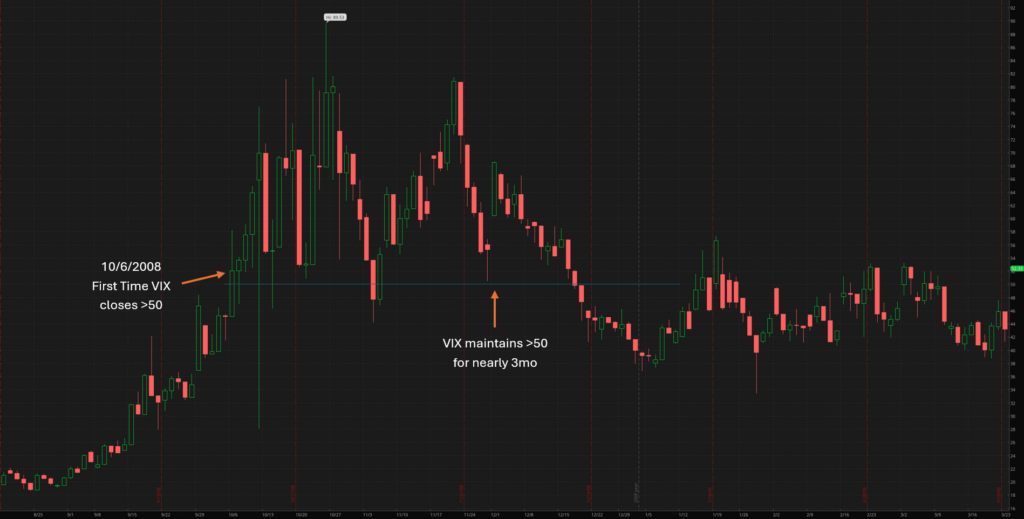
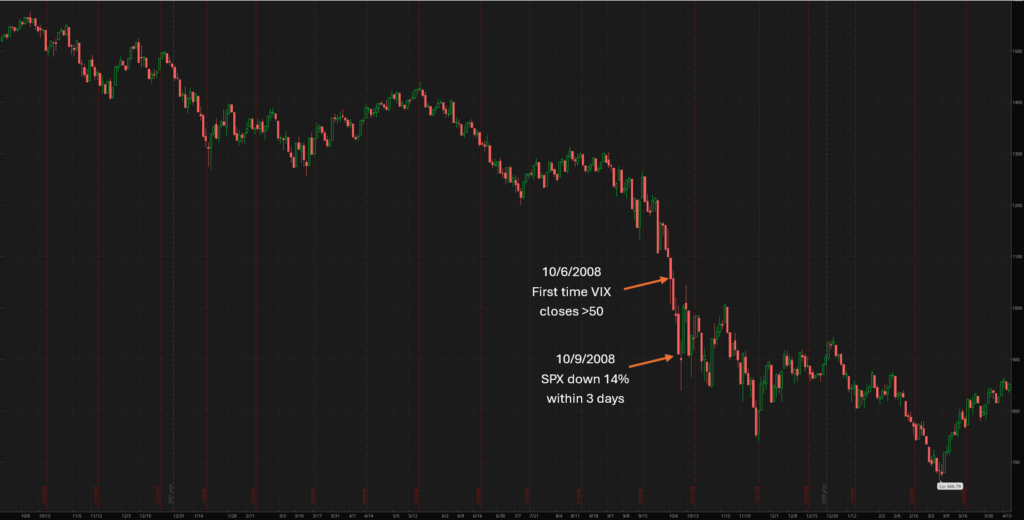
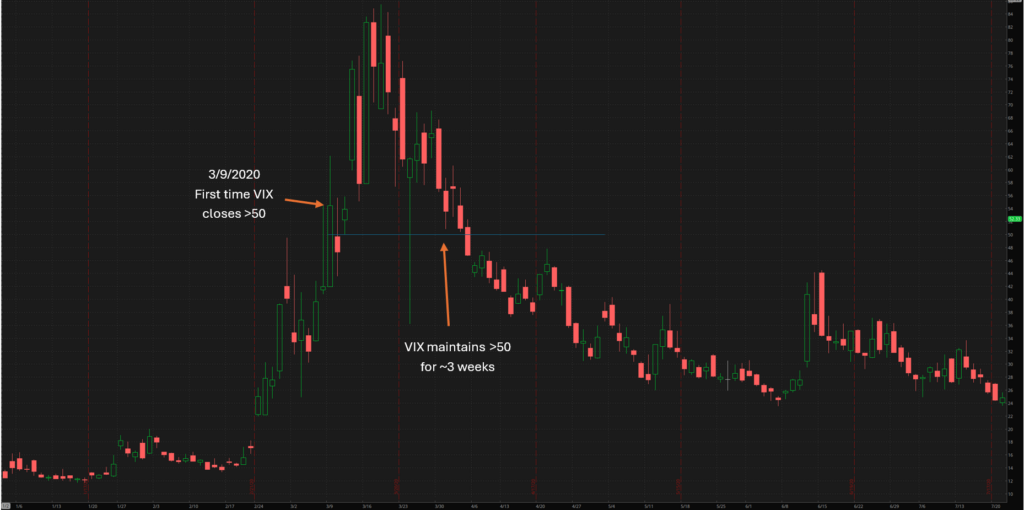
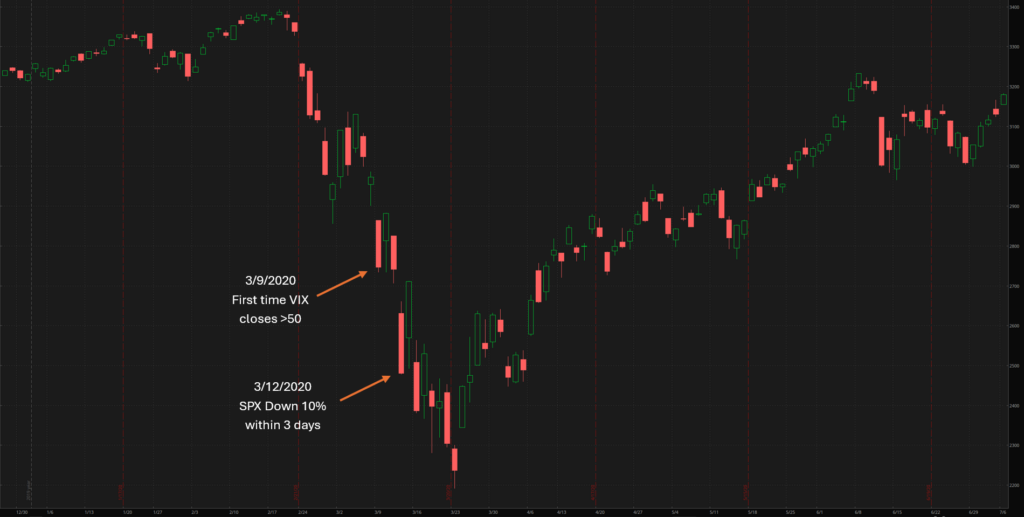
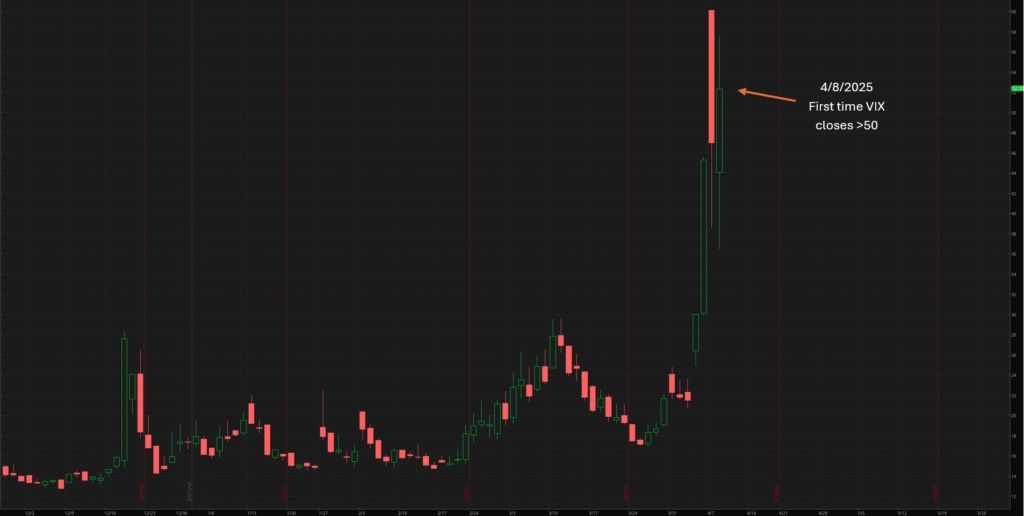
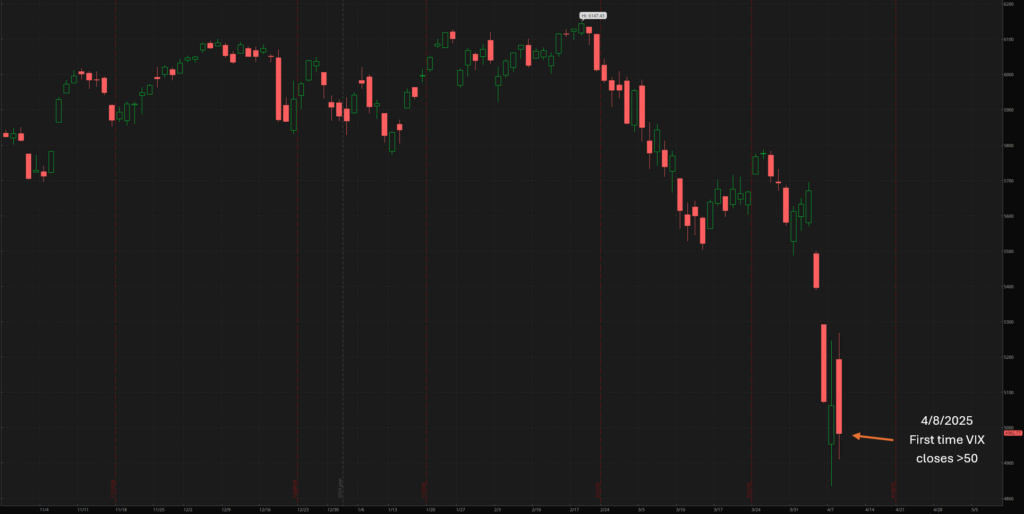
A -20% move in SPX is not *that* abnormal, but -20% accompanied with VIX >50 indicates an extreme and adverse event. It should be mentioned that only two occurrences is a very small sample size (as one would expect with an extreme and adverse market environment), however it is a clear signal that there is extreme uncertainty and risk within the market, regardless of what happens next.
Beyond that, on 4/4 Federal Reserve Chairman Jerome Powell publicly spoke about his concern regarding the recent tariff activity and indicated that the Fed’s primary focus is potential future inflation. This puts the market – and the Fed – in an extremely tricky position. Typically the “Fed Put” has been able to put a floor in markets via various mechanisms including cutting interest rates or increasing the size of their balance sheet, etc. However, reading between the lines, it sounds like Powell is implying that the “Fed Put” is substantially lower than the market assumes (and likely hopes).
Trying to find where the “strike price” of the Fed Put is impossible, but in the past, the Fed has been more concerned with credit spreads instead of equity markets. Here are the levels of credit spreads for the date the VIX first closed >50:
10/6/2008: 13.07
3/9/2020: 6.68
4/8/2025: 4.61
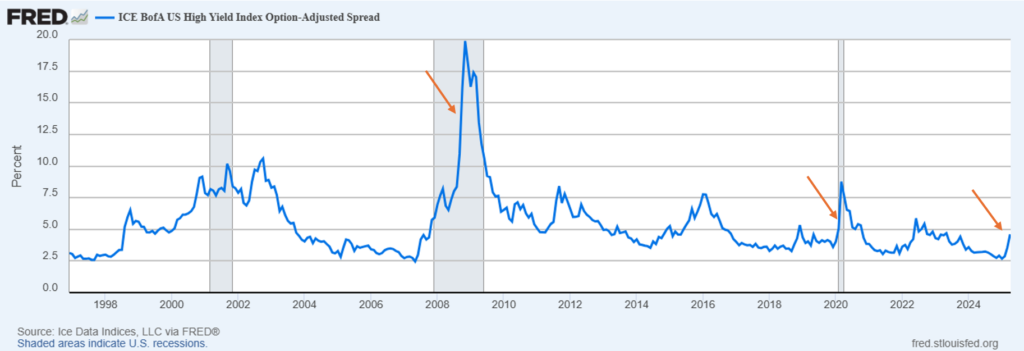
Despite the recent rapid rise in spreads, compared to the prior two instances when VIX first closed >50, credit spreads are “relatively low”. This, accompanied by the Chairman’s public comments, makes it evident that the Fed will not act in any form (i.e. cut rates or increase their balance sheet) unless there is substantially more turmoil.
Ultimately, markets are on the precipice of an abyss. A soft breeze could tip the market over the edge, but it hasn’t happened quite yet. The proverbial tide is on its way out and as the legendary Warren Buffet opined, “only when the tide goes out do you discover who’s been swimming naked,” and there’s always someone swimming naked.
Can markets recover and can uncertainty and turmoil in the markets resolve before we find out who is “swimming naked”? Let’s stay tuned.